

The diagrams below show the development of the horse over a period of 40 million years. Summarize the information by selecting and reporting the main features and make comparisons where relevant.

Mở bài
Đầu tiên, để viết phần mở bài, chúng ta cần paraphrase lại đề bài.
The diagrams below show the development of the horse over a period of 40 million years.
→ The diagrams illustrate the evolution of the horse across four periods of time spanning forty million years.
Tổng quan
Để viết được phần tổng quan trong IELTS Writing Task 1, ta cần nhìn vào toàn bộ diagram và xác định những đặc điểm nổi bật nhất. Với dạng bài quá trình phát triển (evolution) như đề này, câu hỏi cần đặt ra là: con ngựa đã thay đổi như thế nào theo thời gian?
Quan sát bốn giai đoạn phát triển, chúng ta có thể nhận thấy như sau:
- Về ngoại hình: kích thước cơ thể tăng dần, các đặc điểm bên ngoài như bờm và đuôi cũng trở nên rõ ràng và phát triển hơn theo thời gian.
- Về cấu trúc bàn chân: số lượng ngón chân giảm dần và cuối cùng hợp lại thành một móng duy nhất.

Từ đó ta có một phần tổng quan như sau:
Overall, the horse progressively changed in a number of ways, including increased body size, a more defined mane and tail, and the reduction of its toes to a single hoof.
Thân bài
Ở dạng Process – quá trình phát triển, Huyền sẽ nhóm các hình theo từng giai đoạn thời gian và mô tả những thay đổi rõ rệt nhất của con ngựa qua mỗi giai đoạn.
Cụ thể, nhìn vào diagram này, ta thấy quá trình tiến hóa của ngựa có thể chia thành hai chặng chính:
- giai đoạn từ 40 đến 30 triệu năm trước
- và giai đoạn từ 15 triệu năm trước đến hiện đại
Vì vậy, phần thân bài sẽ được triển khai thành 2 đoạn, mỗi đoạn mô tả sự thay đổi của con ngựa trong một chặng thời gian.

Dựa vào dàn ý trên, Huyền có thân bài hoàn chỉnh như sau:
Looking first at the two oldest horses, the earliest form, Eohippus, which dated back 40 million years, was relatively small and bore little resemblance to today’s horses. It possessed five toes on each limb and lacked a distinguishable mane. By 30 million years ago, this species had evolved into Mesohippus, which was noticeably larger and had a primitive mane and a longer tail. The number of toes had reduced from five to three, with the middle one slightly bigger than the others.
Moving onto the two more recent horses, Merychippus, which emerged 15 million years ago, was much closer in appearance to today’s horses, with a more muscular build and a more pronounced mane. Its central toe had grown significantly larger and longer than before. Finally, the modern horse features a fuller tail and a thicker mane, and the three toes of its ancestor have merged into one large, solid hoof.
Sample Answer
The diagrams illustrate the evolution of the horse across four periods of time spanning forty million years. Overall, the horse progressively changed in a number of ways, including increased body size, a more defined mane and tail, and the reduction of its toes to a single hoof.
Looking first at the two oldest horses, the earliest form, Eohippus, which dated back 40 million years, was relatively small and bore little resemblance to today’s horses. It possessed five toes on each limb and lacked a distinguishable mane. By 30 million years ago, this species had evolved into Mesohippus, which was noticeably larger and had a primitive mane and a longer tail. The number of toes had reduced from five to three, with the middle one slightly bigger than the others.
Moving onto the two more recent horses, Merychippus, which emerged 15 million years ago, was much closer in appearance to today’s horses, with a more muscular build and a more pronounced mane. Its central toe had grown significantly larger and longer than before. Finally, the modern horse features a fuller tail and a thicker mane, and the three toes of its ancestor have merged into one large, solid hoof.
Từ vựng
- evolution = the gradual development of something over a long period of time : quá trình tiến hoá
- span (a period of time) = to last for a particular length of time : kéo dài trong một khoảng thời gian
- progressively = gradually over time : dần dần theo thời gian
- primitive = very basic or simple; early in development : nguyên thuỷ, sơ khai
- evolve into = to gradually change into a more developed form : tiến hoá thành
- muscular build = a body shape with strong muscles : thân hình săn chắc
- emerge = to appear or come into existence : xuất hiện
- feature (v) = to have as an important part or characteristic : có đặc điểm là
- merge into = to combine and become a single unit : hợp lại thành
- solid hoof = a hard, single foot of a horse : móng guốc cứng
Khoá học IELTS Writing Online – IELTS Nguyễn Huyền
Khoá học IELTS Writing Online được Huyền thiết kế dành cho người mới bắt đầu và những bạn đang gặp khó khăn trong việc nắm rõ phương pháp viết từng dạng bài của cả Task 1 và Task 2.
Thay vì học Writing theo cách học thuộc bài mẫu, khoá học tập trung vào việc giúp học viên:
- Hiểu cách phân tích đề theo từng dạng
- Biết cách lập dàn ý đúng logic trước khi viết
- Nắm được cấu trúc câu và cách dùng từ an toàn để ăn điểm
- Áp dụng phương pháp một cách linh hoạt vào mọi đề thi
Trong khoá học, mỗi dạng bài đều được hướng dẫn từng bước, từ cách viết mở bài – tổng quan – thân bài – kết luận, kèm theo ví dụ minh hoạ rõ ràng và từ vựng thực tế có thể áp dụng ngay.
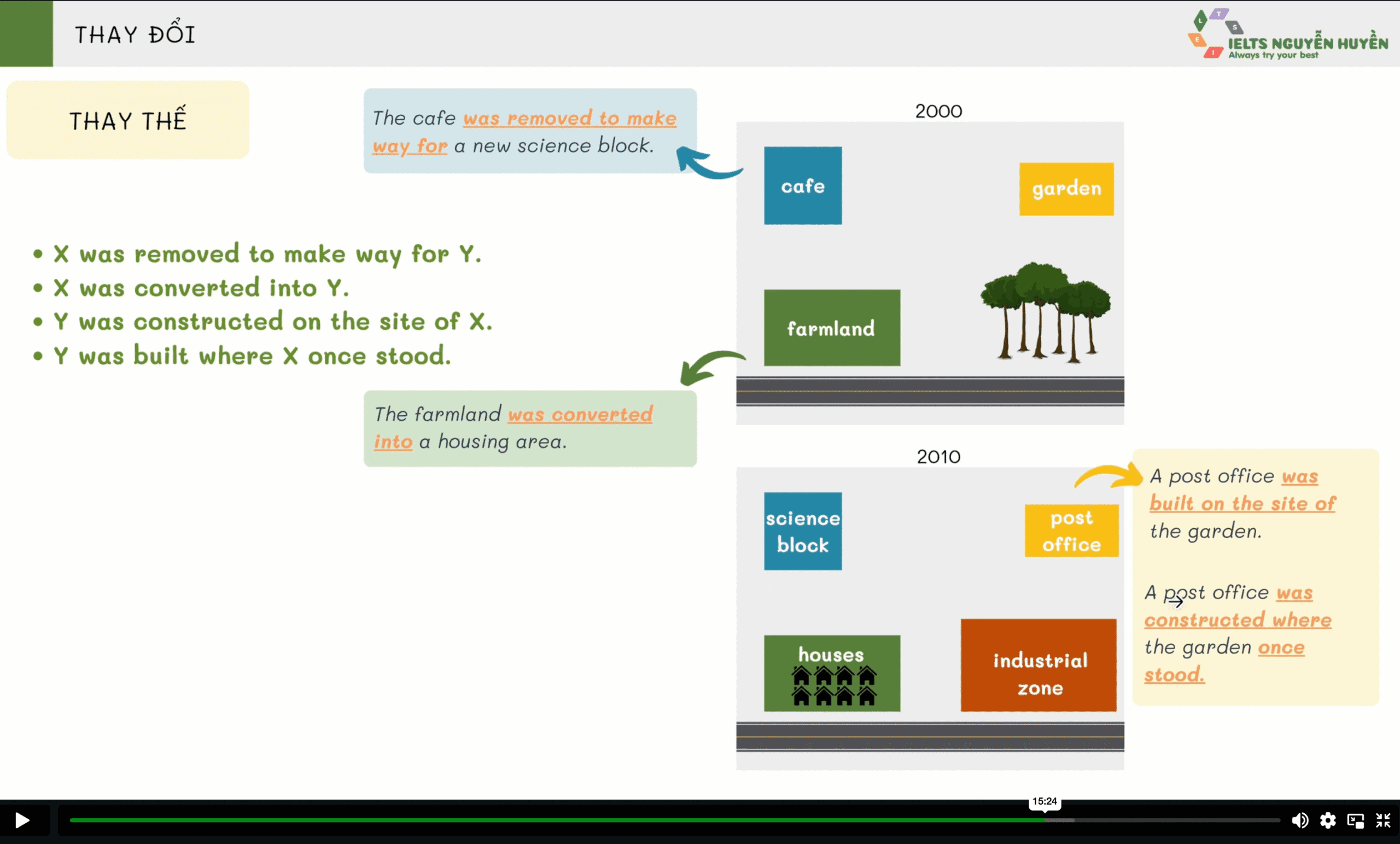
Hình ảnh bên dưới được trích từ một bài giảng trong khoá học, giúp bạn hình dung rõ hơn cách Huyền hướng dẫn học viên biến thông tin từ biểu đồ thành câu văn chuẩn IELTS, thay vì viết theo cảm tính.
Tải bản PDF
Huyền đã tạo một bản PDF cho bài mẫu này, bạn có thể tải tại link bên dưới nhé.


